
Post Sign Experience
Last touchpoint we control in the agreement journey
Docusign has more than 1.8 M customers and more than a billion users across 180+ countries who use our platform. Tens of millions of signers hit post-sign each month (hundreds of millions annually), which is the last touchpoint we fully control in the agreement journey.
Today, this moment is underused and inconsistent, but it’s a high-leverage place to increase trust and drive next actions. We’re investing in this to strengthen the end-to-end Intelligent Agreement Management story.
👩🏻💻 Role:
Lead Designer
🤝 Team:
Product Manager, Front/Back End Engineering
🛠️ Timeline:
May 2026 – present
Problem
Today’s post-sign experience is fragmented
In today's product, we see multiple post-sign pages exist across products and platforms, with different layouts, messages, and CTAs. Signers don't always know whether they're truly done or what they should do next, which leads to confusion and drop-off.
We also run into an issue where we can't easily run consistent experiments or measure impact because each experience is bespoke. This fragmentation increases design and engineering overhead and creates long-term maintenance and debt.
Solution
Unifying or templatizing the post-sign experience
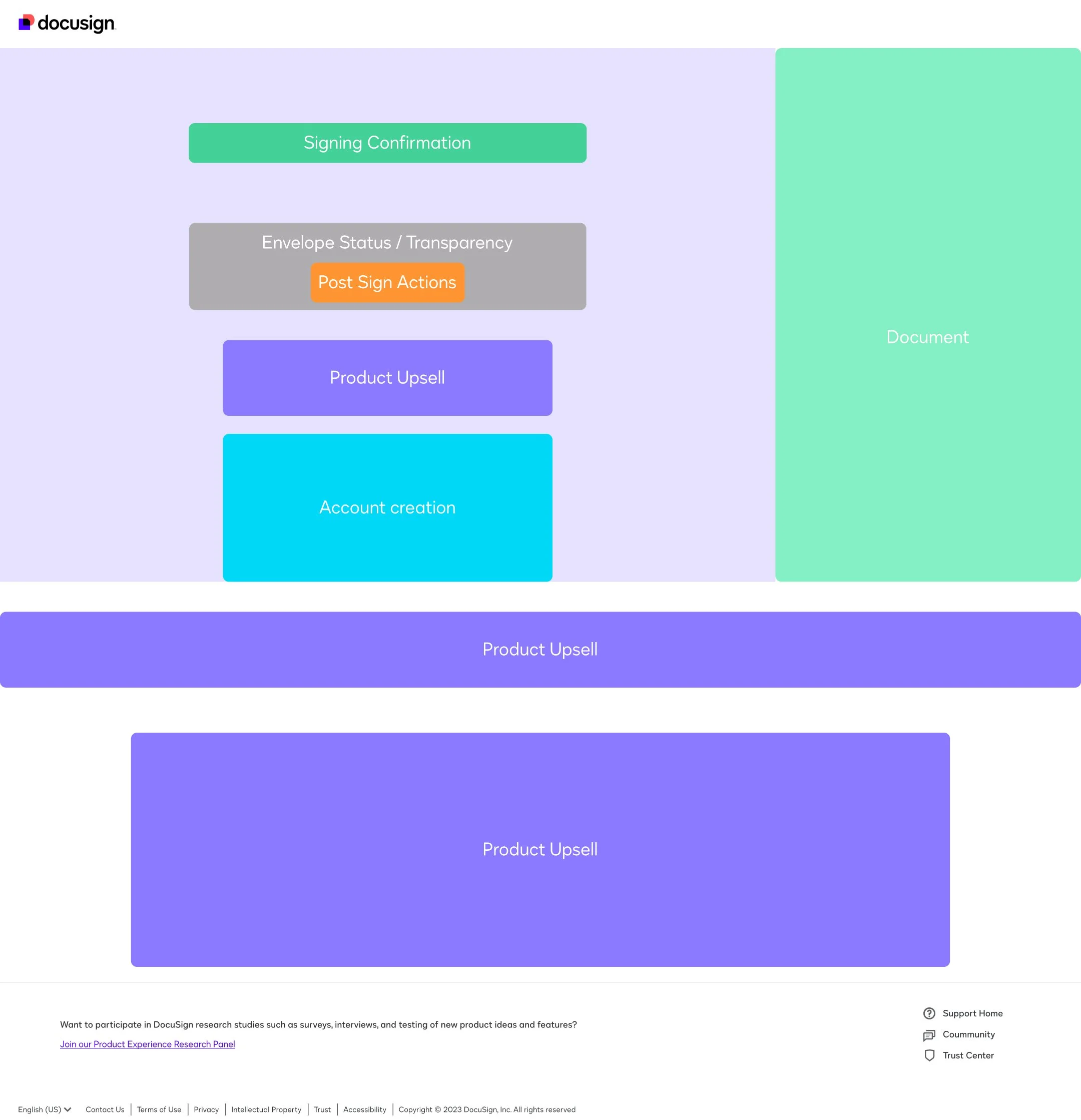
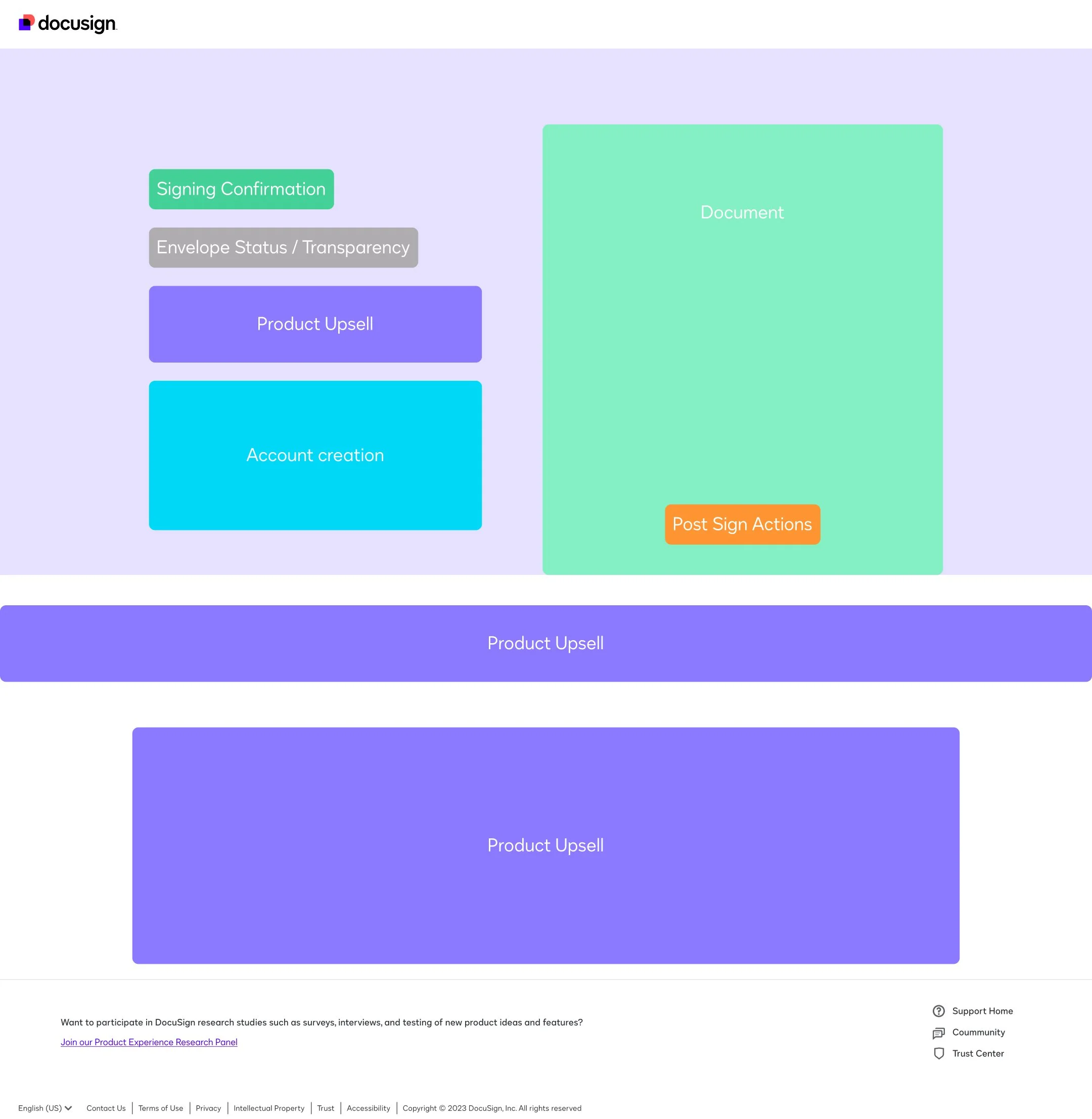
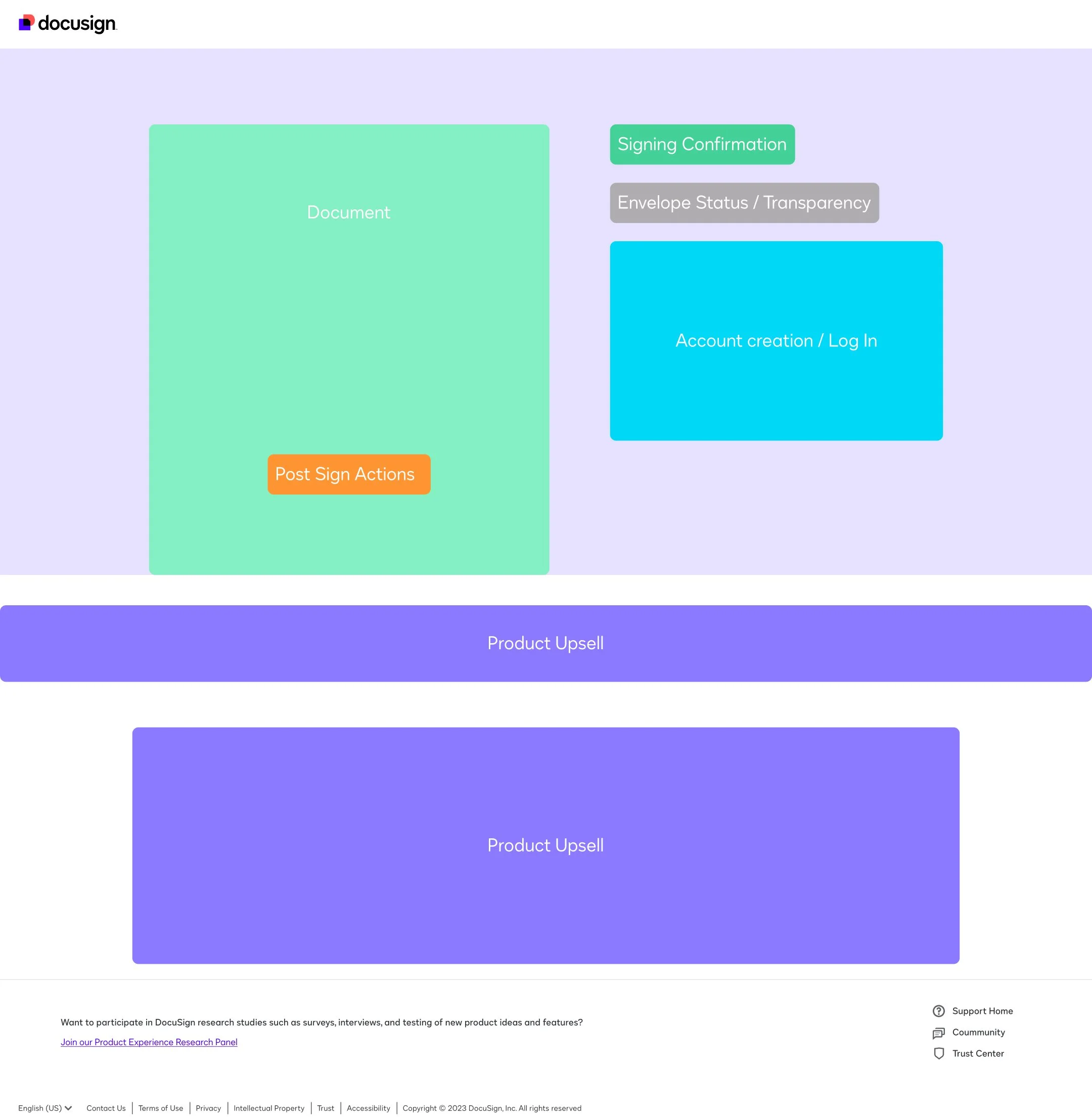
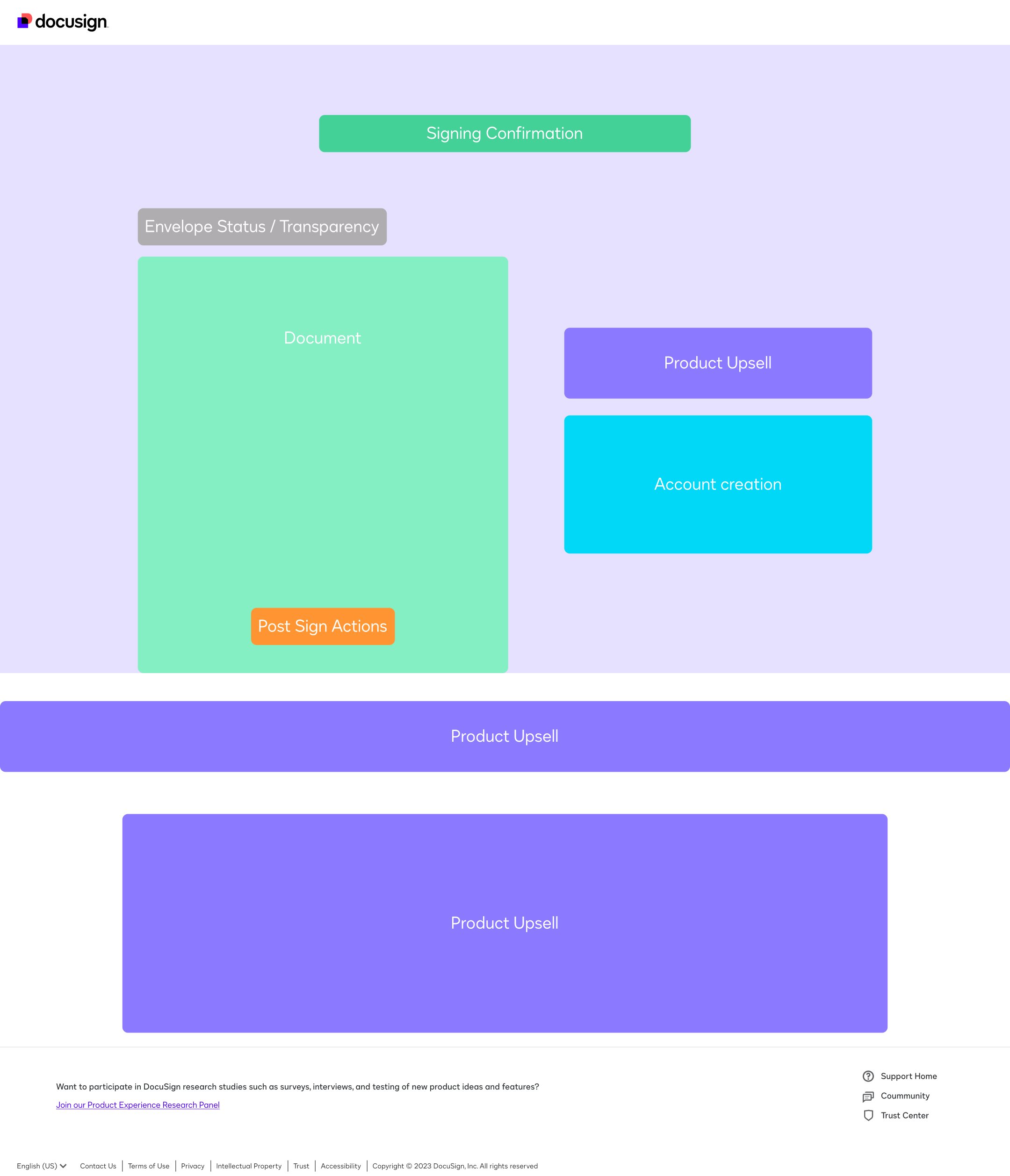
Our goal is to consolidate all post-sign experiences into a single flexible framework that covers key signer scenarios. This design will clearly answer core questions: "Am I done?” “Where's my agreement?” “And what should I do next?"
The designs introduced will be modular and prioritize CTAs that can be tailored by persona and scenario. Long-term, this can become a shared platform, which is easier to maintain, experiment with, and align with our broader IAM vision.
Initiative
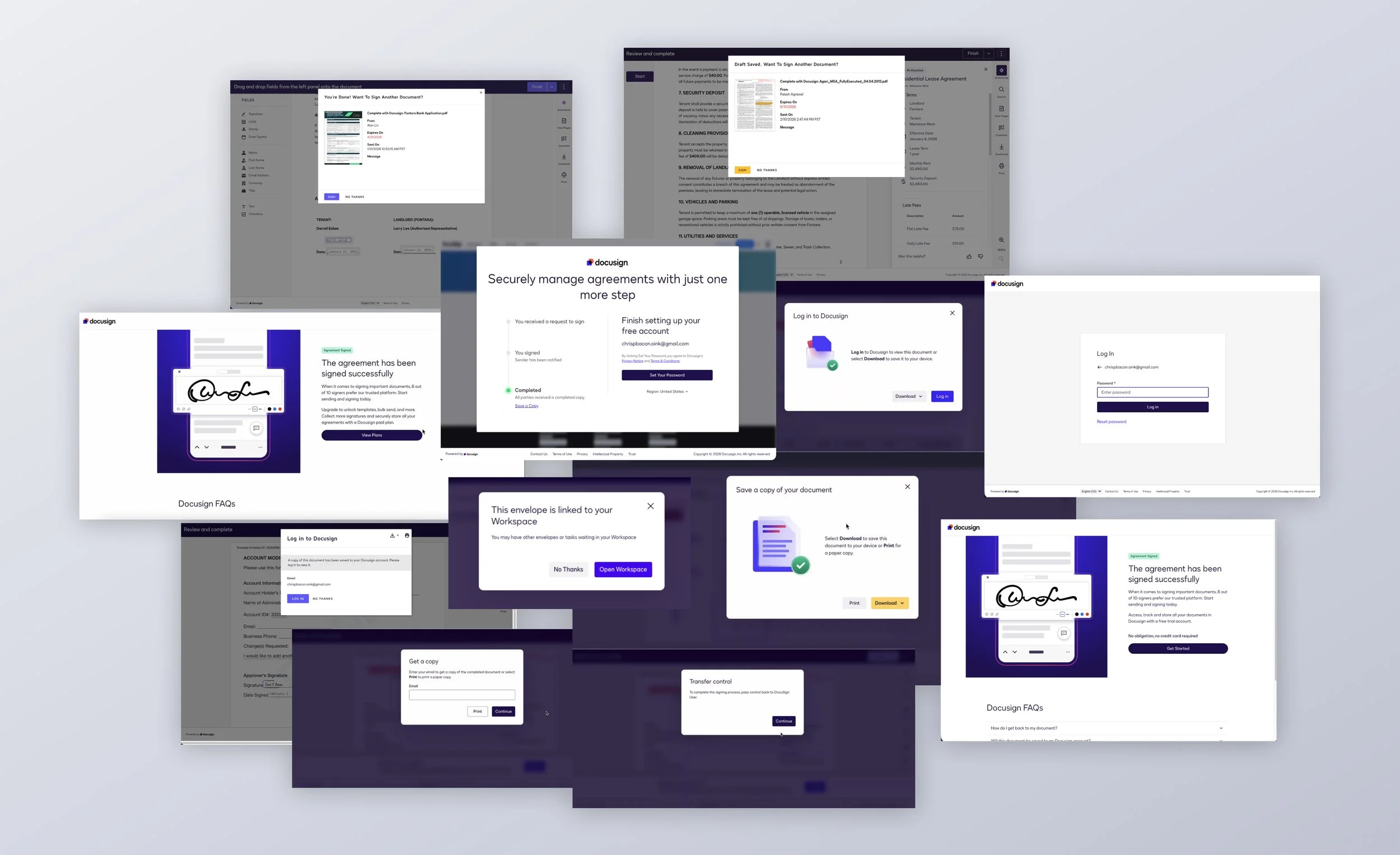
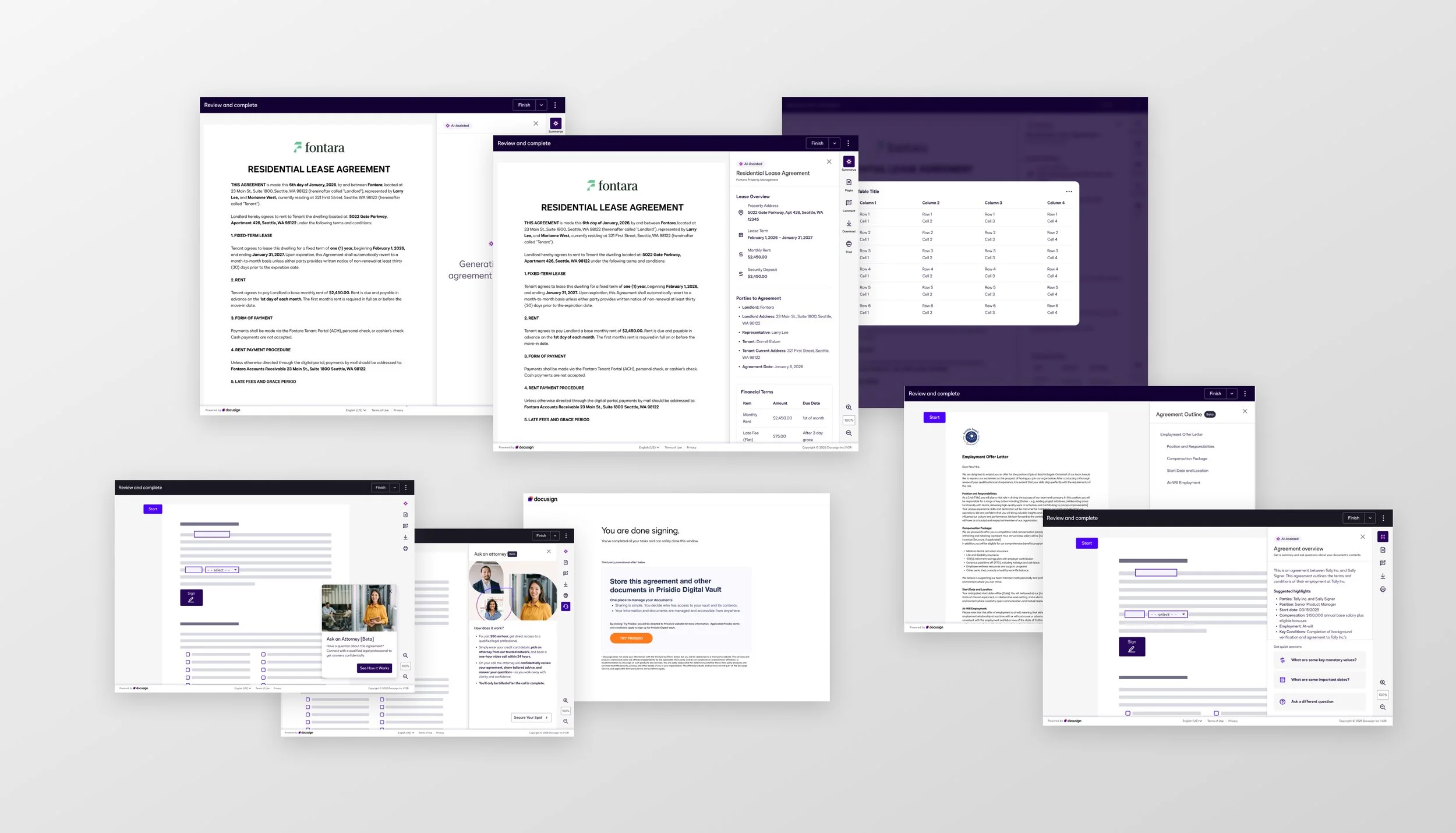
We started consolidating all of the post-sign experiences across accounted, unaccounted, embedded, and partner-owned flows. This mapping had not been done for almost over 10 years ago which required close collaboration with my engineer to help find screens I might not be able to duplicate. [The post-sign pages I was able to find are found in the image above]
Modular Design
We started consolidating all of the post-sign experiences across accounted, unaccounted, embedded, and partner-owned flows. This mapping had not been done for almost over 10 years ago which required close collaboration with my engineer to help find screens I might not be able to duplicate. [The post-sign pages I was able to find are found in the image above]
Recognition
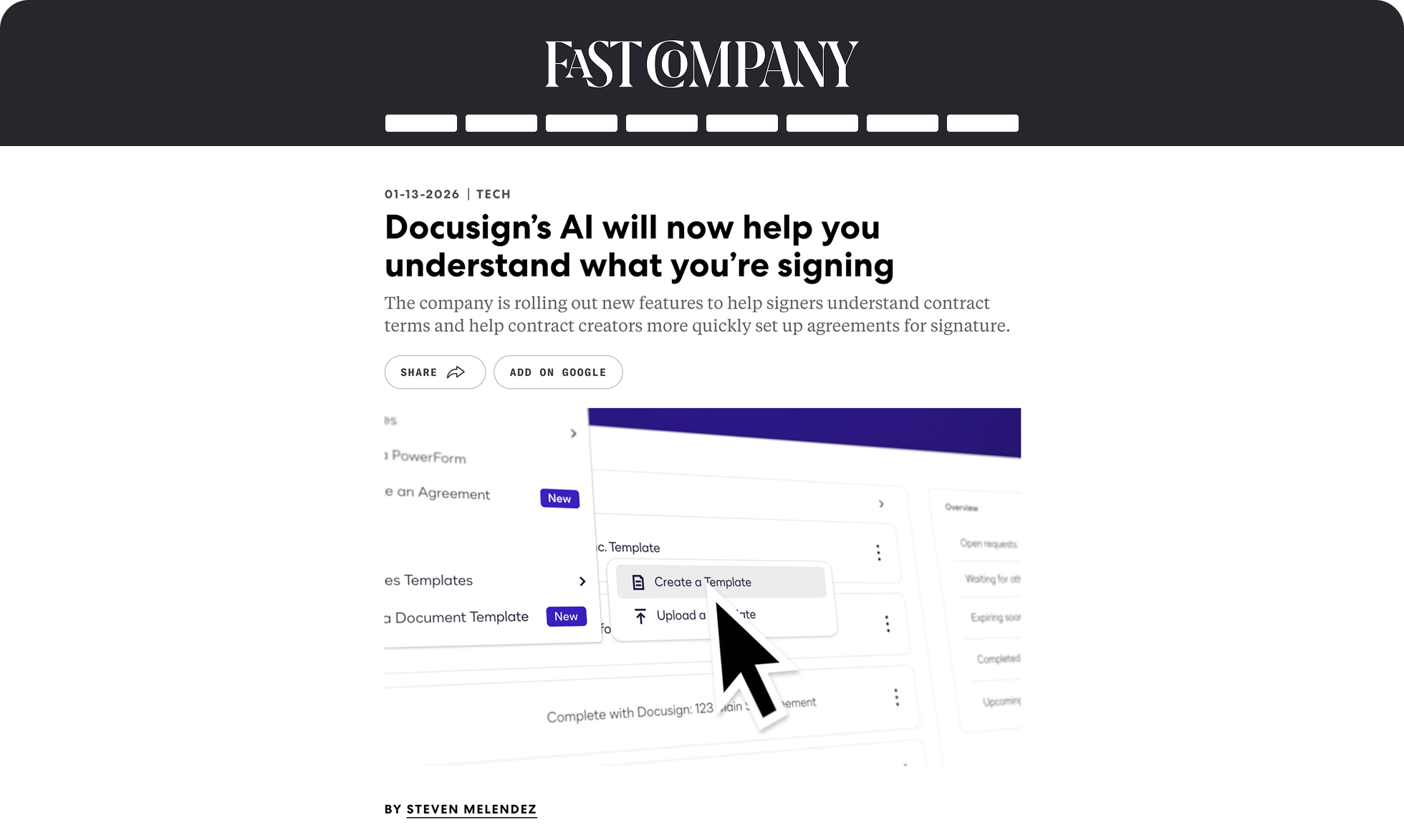
View our feature on Fast Company
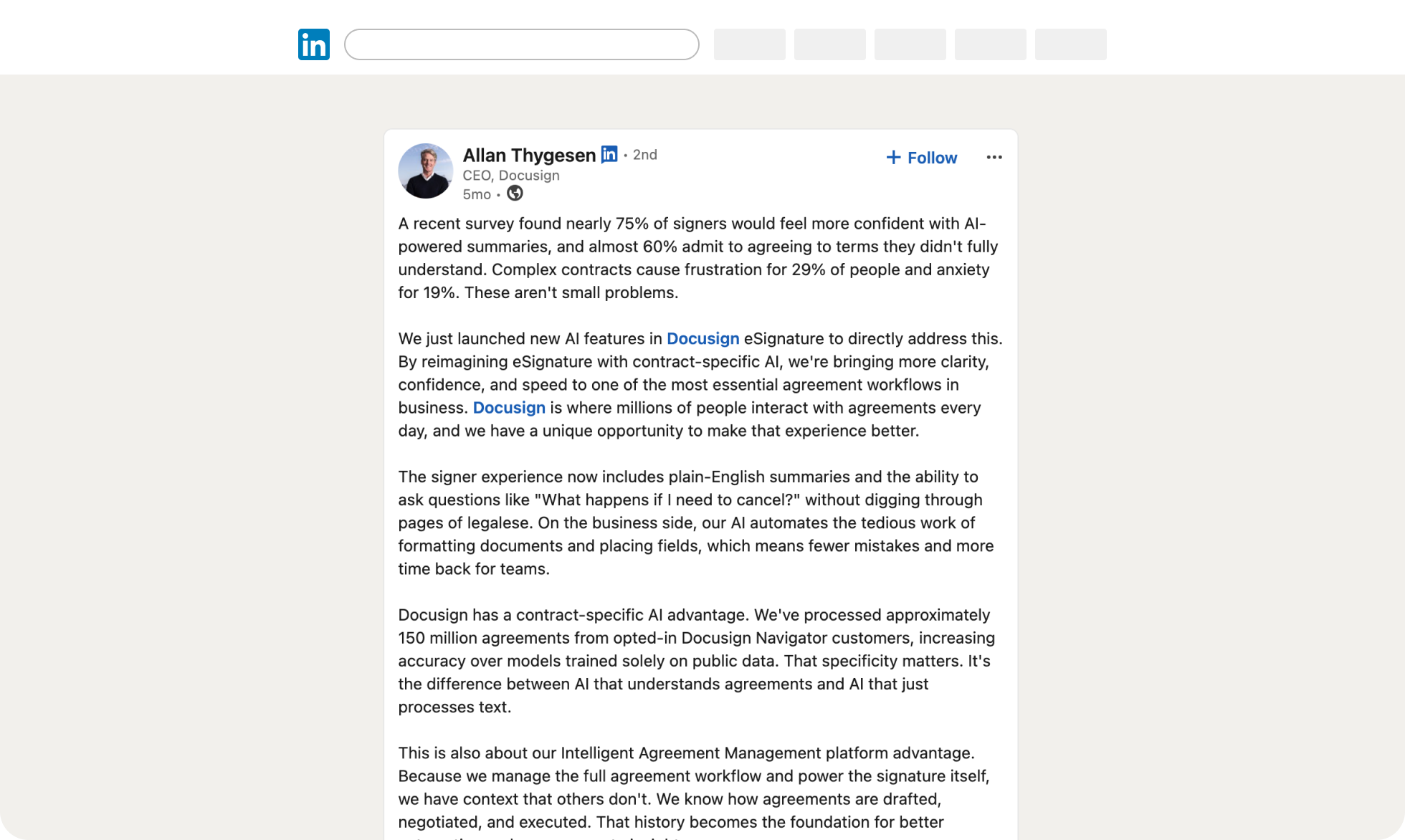
View our feature on Docusign CEO Linkedin
Next Steps…
Following launch, we continuously review customer feedback, product analytics, and qualitative research to identify opportunities for improvement and validate where AI delivers the most value. Each iteration is driven by measurable user behavior, ensuring we evolve the experience based on evidence rather than assumptions.
As part of H2 planning, I partnered closely with Product and Engineering to define a longer-term vision for Signing, identifying six new experience opportunities that extend beyond execution to help users better understand, navigate, and confidently complete agreements.
This work positions AI Summary and Q&A as the first step toward a more intelligent, assistive signing experience—one that continues to evolve alongside our customers' needs.